YASHVEER INDER SURDAV SINGH
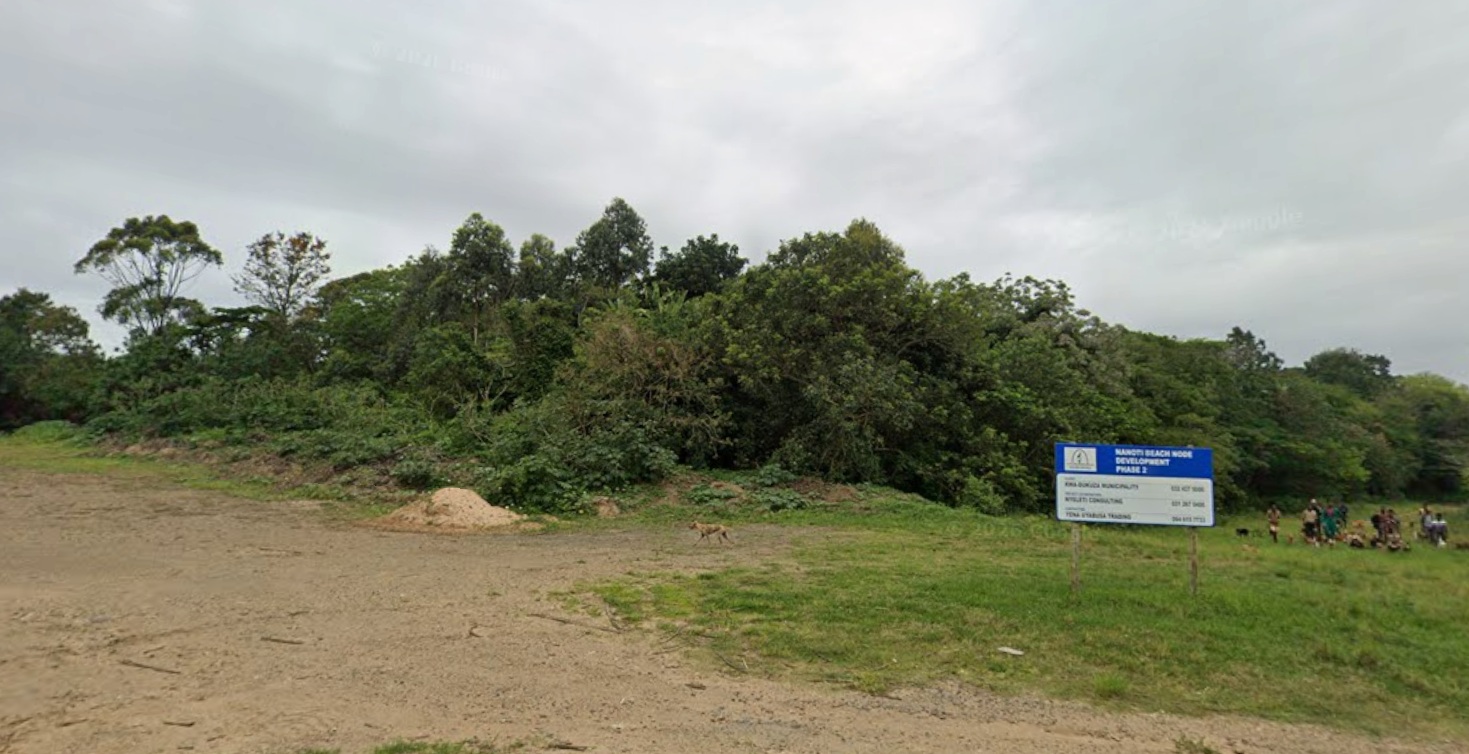
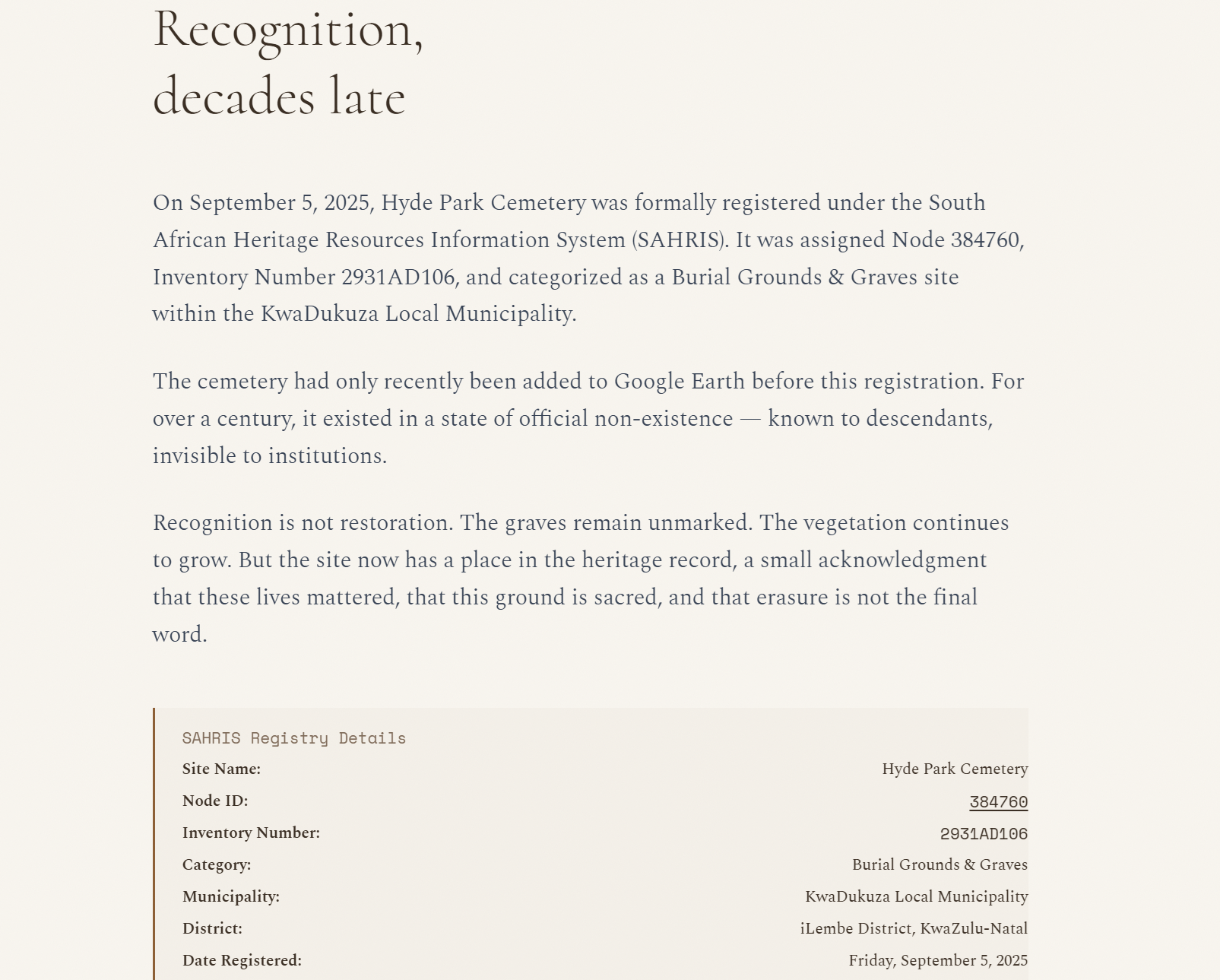
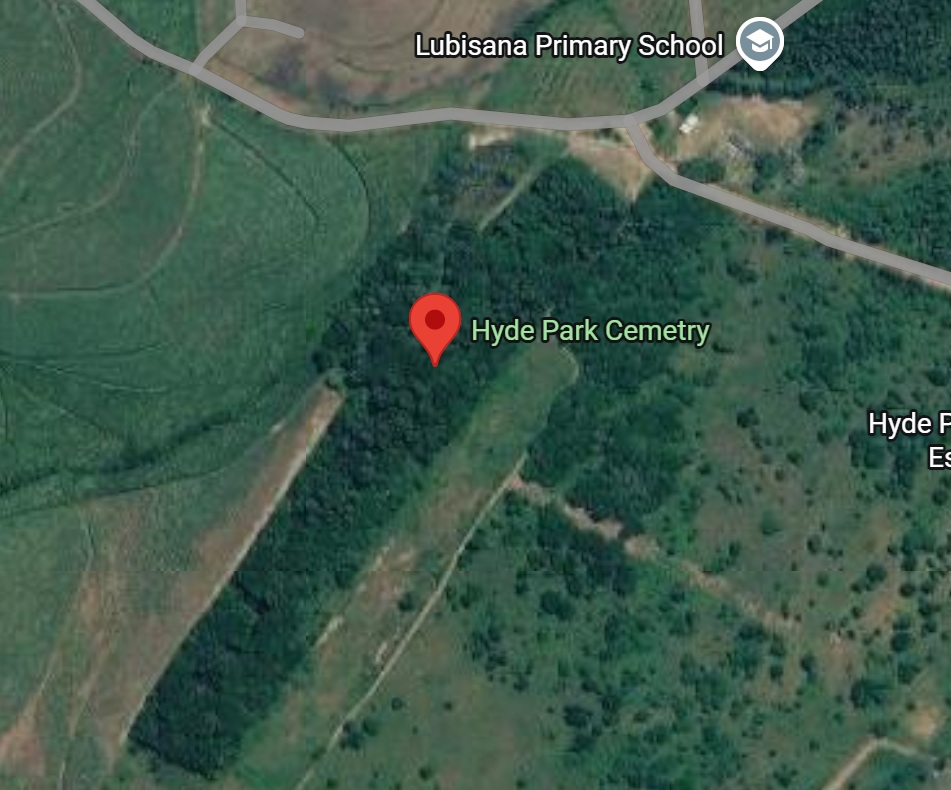
In the heart of KwaDukuza, within the iLembe District of KwaZulu-Natal, lies a cemetery that time and officialdom chose to forget. There are no tombstones here. No plaques bearing names or dates. No paved pathways for mourners to walk.Vegetation has reclaimed the earth — thick subtropical growth covers what were once marked graves. For decades, this site existed only in oral memory, passed down through families who knew that their ancestors rested here, even when maps and records said nothing.Hyde Park Cemetery is now registered under the South African Heritage Resources Information System (SAHRIS), recognized at last as a Burial Grounds & Graves site. But recognition came late. The first graves here belong to Indentured Indian Labourers, and several carry the name Singh.
Resting SoilThe Legacy of the Singh Family and the Forgotten Lives of Hyde Park Cemetery
In a quiet and unassuming part of the KwaDukuza region lies a cemetery unlike any other — one that does not boast grandeur or adornment, but rather speaks in whispers of sweat, sorrow, endurance, and the quiet dignity of the labouring class. This cemetery, located on what was once the Hyde Park Sugar Estate, holds the final remains of dozens of Indian indentured labourers and their descendants — many of whom forged a life from hardship and whose names are fading into the earth. Among them is the Singh family — a lineage rooted in ancient soil from Uttar Pradesh, India, who crossed oceans and epochs, and laid their bones in Natal, far from the banks of the Ganges.
Summary of the Singh Family's Migration and Legacy
From Rampore to Natal (1889): Innerjit Roopan Singh, his wife Moorti, their two young sons, and Innerjit's younger brother left Ballia, Uttar Pradesh, aboard the SS Congella as indentured labourers. Bound by a ten-year contract, they arrived in Natal on May 26, 1889, to work on James Hulett's Kearsney Sugar Estate in grueling conditions.
Land, Loss, and Life in Nonoti: Following their indenture, the family settled as tenant farmers in Nonoti. However, the oppressive 1913 Land Act dismantled their farming stability, forcing them off the land and leaving them vulnerable to displacement.
Hyde Park — Labour and Burial: Displaced to the Hyde Park Sugar Estate owned by Babu Bodasing, the family endured deep tragedy and loss across generations, including the sudden deaths of family members and the burial of loved ones like Madhia, Jadoonondun, and Surdav in the estate's unmonumented cemetery.
The Cemetery as a Community Archive: The Hyde Park Cemetery stands as a silent witness and living archive to the history of Indian indentured labour in South Africa, preserving the enduring legacy of survival, resilience, and continuity passed down through generations.
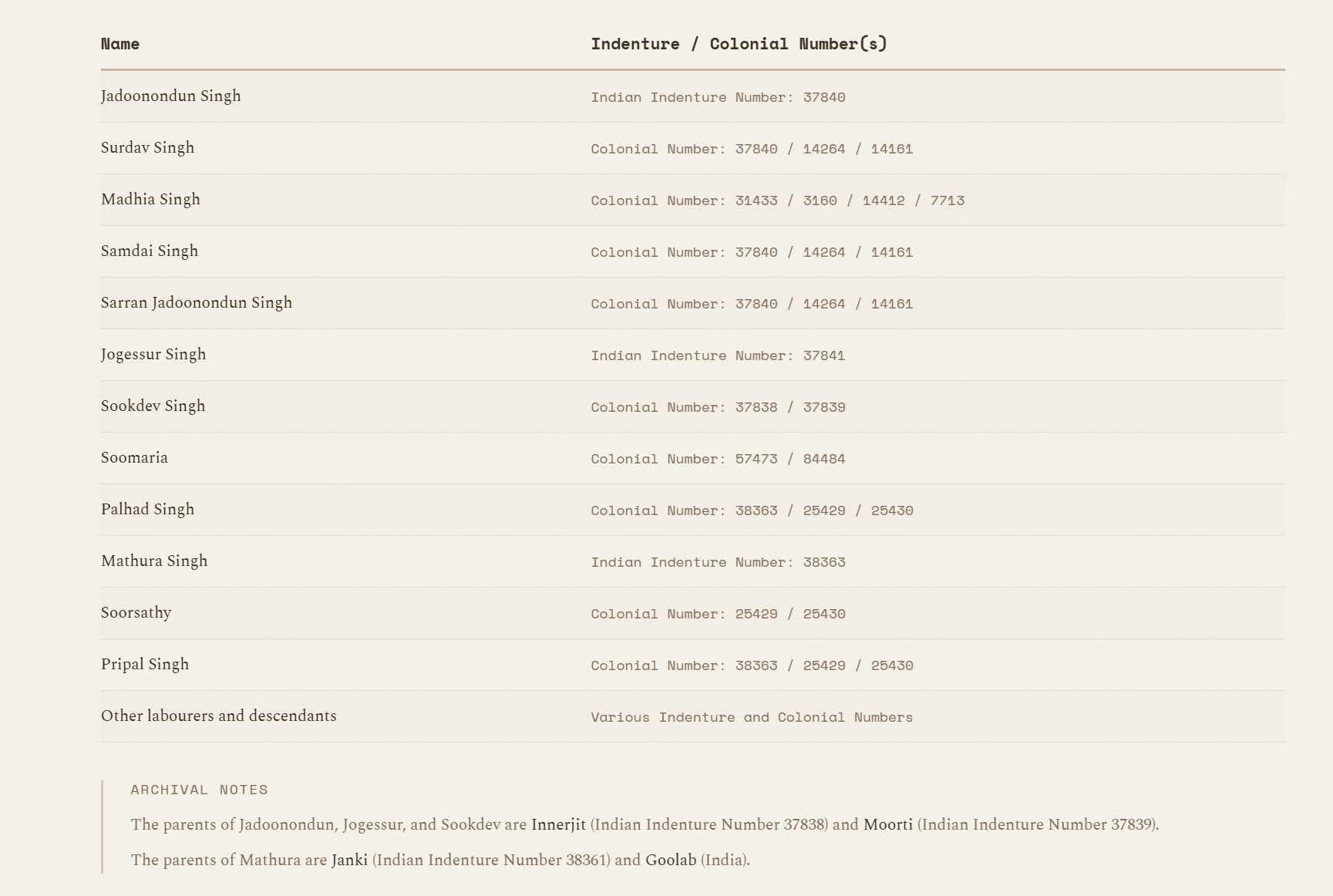
Known burialsDocuments of Ancestors and Table of Ancestors Buried at Hyde Park Cemetery with Colonial Numbers
The following records have been assembled through a combination of oral testimony, archival documents, and community memory. They document the ancestral presence of the Singh family on this land and preserve their legacy within the historical fabric of the site.